Internal Autobiographical Map (IAM)

Science and Methodology

Internal Autobiographical Map (IAM)

A scientific model of identity formation and human behavior

The theoretical foundation of Direct Change Solution® (DCS®).

Author: Prof. Dr. Stoyana Natseva

What is IAM?

The Internal Autobiographical Map (IAM) is an original scientific model describing the mechanism by which life experience becomes identity, and identity becomes behavior and results.

The model is based on the understanding that people do not respond solely to external events, but to the internal map of meanings, beliefs, conclusions and self-definitions built through their own life experience.

This internal map functions as a psychological navigation system that shapes how a person perceives reality, interprets what happens, makes decisions and produces results in life.

IAM offers a complete conceptual framework for understanding the connection between autobiographical memory, emotional encoding, cognitive processes, identity and behavioral patterns.

The internal autobiographical map

Foundation

The scientific basis of the model

IAM was developed through years of research and applied work in psychology, human development and behavioral change. The model integrates concepts from:

Personality psychology

Cognitive psychology

The psychology of memory

Identity theory

Emotional regulation

Contemporary research on learning and adaptation

The scientific validity of the model has been examined through empirical studies with over 480 participants and presented in peer-reviewed publications and academic work.

The Structure

The eight-stage model of identity formation

According to IAM, human identity is not formed suddenly. It passes through a sequence of interconnected processes.

1

Significant experience

An event or situation with high personal and emotional charge.

2

Emotional encoding

The experience is linked to a specific emotional state and stored in memory.

3

Attribution of meaning

The person begins to interpret what happened and to look for its meaning.

4

Cognitive conclusion

An internal rule or belief is formed about oneself, other people or the world.

5

Identity construction

Repeated conclusions integrate into a stable sense of “who I am”.

6

Formation of a behavioral pattern

Identity begins to determine typical choices and reactions.

7

Automatic response

Behavioral patterns become automatic and operate outside conscious control.

8

Result

Repeated actions create real consequences and outcomes in life.

The Manifestation

From identity to reality

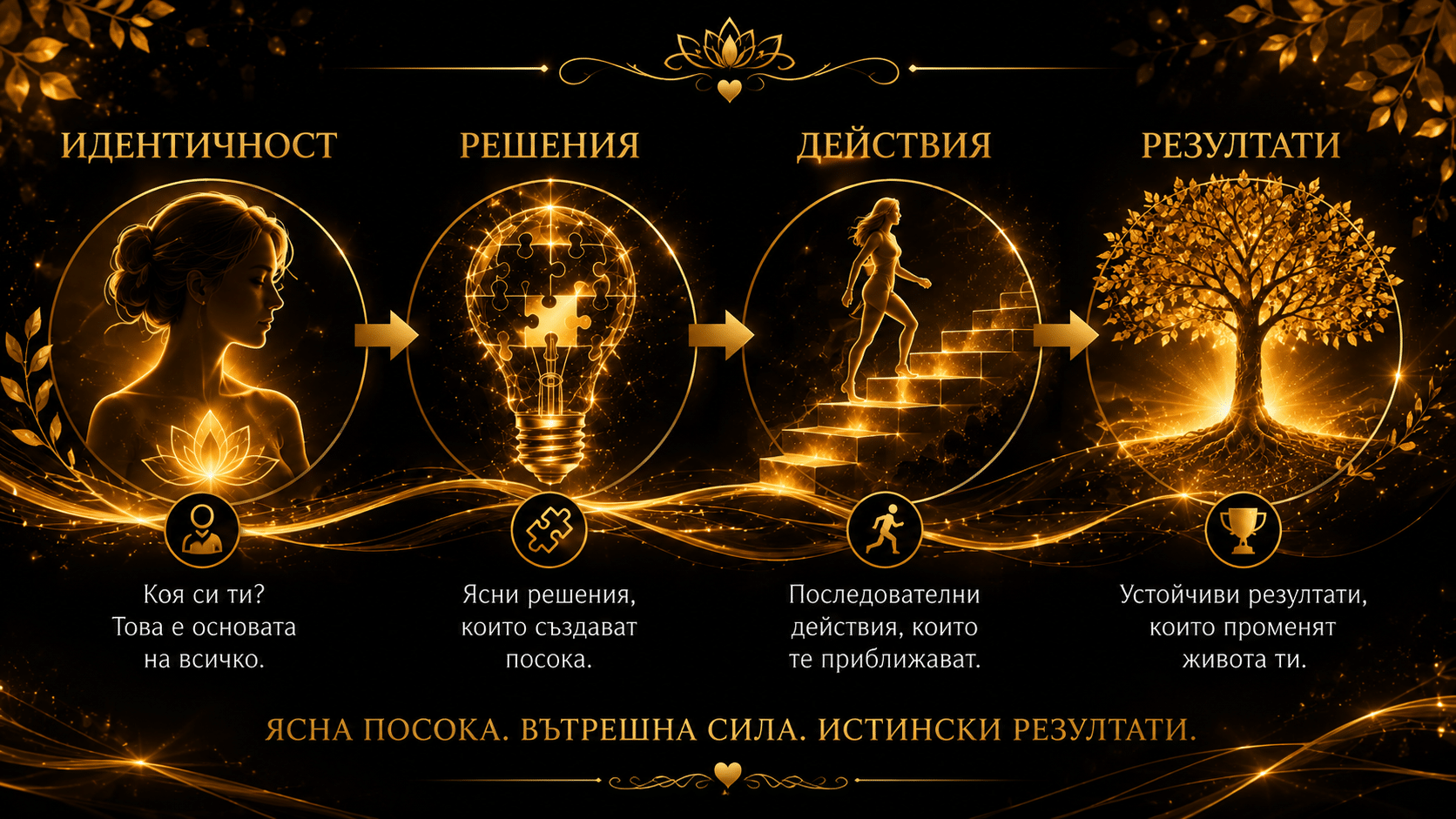
IAM describes the fundamental sequence through which the inner world shapes external results:

Identity → Decisions → Actions → Results

The results then become new evidence that confirms or reinforces the existing identity. This creates a cycle of psychological self-confirmation, which explains why people so often reproduce the same patterns across different life situations.

The cycle of psychological self-confirmation

The Contribution

The scientific novelty of IAM

The scientific

1,000,000+ social media followers and millions of views
Contact Information
stoyana@stoyananatseva.com